Choosing the right flooring material is an important decision for homeowners, business owners, and property developers. Flooring affects the appearance, maintenance requirements, durability, and overall functionality of a building.
Traditional tiles have been used in residential and commercial properties for many years. However, epoxy flooring has emerged as an alternative for people looking for seamless and durable surfaces.
Property owners researching Epoxy Flooring in Gurgaon and Epoxy Flooring in Delhi often compare these two options before making a final decision. Understanding their differences can help identify the most suitable flooring solution.
Understanding Traditional Tile Flooring
Tile flooring is manufactured using materials such as ceramic, porcelain, and natural stone. These materials are available in different colours, patterns, sizes, and textures.
Tiles are commonly installed using adhesive or mortar and generally require grout between individual pieces. They are widely used in bathrooms, kitchens, bedrooms, offices, and commercial spaces.
One major advantage of tile flooring is its variety of designs. Property owners can choose from simple patterns, decorative designs, and premium finishes according to their preferences.
However, grout lines may require regular cleaning, and individual tiles can crack or become loose if installation quality or substrate conditions are poor.
What Makes Epoxy Flooring Different?
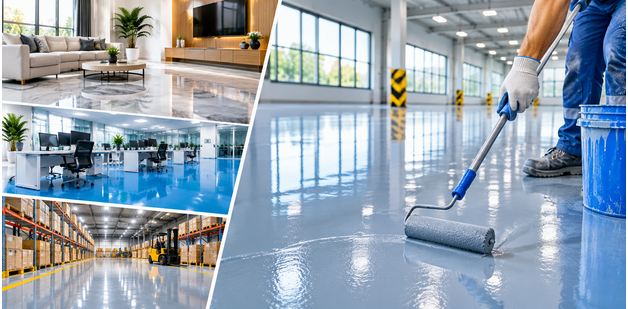
Epoxy flooring is a resin-based coating applied over a properly prepared concrete surface. The resin and hardener combine to form a strong protective layer after curing.
Unlike conventional tiles, epoxy flooring creates a largely seamless surface without traditional grout joints.
It is available in different finishes, including glossy, matte, decorative, and metallic options. Depending on the formulation, it can also provide resistance against abrasion, selected chemicals, and stains.
Epoxy Flooring vs Tiles: Key Differences
1. Durability
Both materials can offer good durability when installed correctly.
High-quality porcelain tiles are suitable for many residential and commercial applications. However, individual tiles may crack due to impact or movement in the underlying surface.
Epoxy coatings can provide a continuous protective layer over concrete. Their performance depends on coating thickness, substrate preparation, and the type of traffic they experience.
2. Maintenance Requirements
Tile floors are generally easy to clean, but grout lines can collect dirt and stains over time.
Epoxy flooring has a seamless finish that reduces areas where dirt can accumulate. Routine sweeping and mopping are usually sufficient for regular maintenance.
This feature makes epoxy particularly useful in warehouses, garages, and selected commercial environments.
3. Appearance and Design
Tiles offer extensive design options, including stone-like patterns, wooden textures, and decorative finishes.
Epoxy flooring provides different customisation possibilities through colours, metallic effects, and decorative flakes. It can create a modern and uniform appearance.
People exploring Epoxy Flooring in Delhi can consider these design options when planning commercial interiors, showrooms, or industrial spaces.
4. Installation Process
Tile installation involves preparing the base, applying adhesive, placing tiles, and filling joints with grout.
Epoxy flooring requires concrete preparation, crack repairs, priming, and the application of coating layers. The floor must also be allowed to cure properly before regular use.
Both methods require skilled installation for satisfactory results.
5. Cost Considerations
The overall cost of flooring depends on material quality, labour, surface condition, design, and installation requirements.
Basic tiles may be more economical initially, while premium tiles can involve considerable material and installation expenses.
Epoxy flooring costs vary according to coating type, thickness, surface preparation, and project size. Therefore, comparing complete project quotations is more useful than comparing material prices alone.
Which Flooring Is Better for Commercial Spaces?
Commercial spaces require flooring that matches their daily activities. Retail stores and offices may prioritise appearance, while warehouses and manufacturing units may require abrasion resistance and easy maintenance.
Epoxy flooring is often considered for industrial facilities, parking areas, workshops, and warehouses because specialised systems can be designed for these environments.
However, tiles may be more suitable for certain offices, restaurants, and residential interiors where decorative variety is a priority.
Which Option Is Better for Residential Properties?
For bedrooms, living rooms, and traditional home interiors, tiles remain a practical and popular choice.
Epoxy flooring can be considered for garages, basements, utility spaces, and contemporary interiors. Homeowners should evaluate slip resistance, sunlight exposure, and the suitability of the selected coating system.
Factors to Consider Before Making a Decision
Before selecting either option, consider the following:
- Expected foot and vehicle traffic.
- Existing floor condition.
- Budget and installation expenses.
- Cleaning and maintenance requirements.
- Interior design preferences.
- Resistance to chemicals, moisture, and impact.
- Expected lifespan and repair requirements.
Consulting an experienced flooring professional can help identify the correct solution.
Conclusion
Epoxy flooring and traditional tiles both offer useful advantages. Tiles provide extensive decorative choices and are suitable for many residential applications. Epoxy flooring offers a seamless surface, easy maintenance, and specialised protective properties.
The right choice depends on the property’s purpose, budget, and operating conditions. Those researching Epoxy Flooring in Gurgaon should compare coating specifications and installation quality before making a decision.
Similarly, evaluating Epoxy Flooring in Delhi requires understanding the specific flooring requirements rather than selecting a material based only on appearance or initial price.