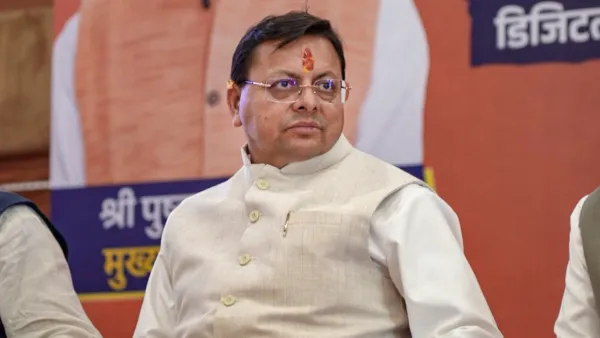
Over the past five years, the Pushkar Singh Dhami-led Uttarakhand government has sought to position itself as an administration centred on policy continuity, governance reforms and implementation. Unlike earlier phases of political instability in the state, the government has benefited from uninterrupted administrative continuity, allowing it to pursue long-pending legislative reforms while investing in infrastructure, connectivity, healthcare, education, tourism and industrial development. The administration says this period of stable governance has become the foundation for faster policy execution, improved transparency, stronger public service delivery and Uttarakhand’s long-term development.
Among the defining reforms of the Dhami government’s tenure has been the implementation of the Uniform Civil Code (UCC), which came into force on January 27, 2025. With this, Uttarakhand became the first state in India to enforce a common civil framework governing marriage, divorce, succession and live-in relationships. Replacing religion-based personal civil laws in these areas, the government says the legislation seeks to promote legal uniformity and gender justice while addressing practices such as child marriage, polygamy, triple talaq, halala and iddat. Members of the drafting committee have described the UCC as an attempt to modernise civil laws through a common legal framework applicable to all citizens.
Reforms were not limited to civil laws. Following a series of recruitment examination paper leak cases, the state introduced the Uttarakhand Public Examinations (Measures for Prevention of Unfair Means in Recruitment) Act, 2023, which it describes as one of the country’s toughest anti-copying laws. The legislation prescribes life imprisonment and fines of up to ₹10 crore for organised cheating rackets involving coaching institutes, service providers and printing presses. Candidates found using unfair means can face imprisonment, financial penalties and a ban of up to 10 years from competitive examinations. The government maintains that the law is intended to restore credibility to recruitment processes and ensure that selections are based on merit.
Law and order has formed another important part of the government’s reform agenda. The Uttarakhand Public (Government) and Recovery of Damage to Private Property Ordinance, 2024, empowers authorities to recover the cost of damage caused to government and private property during riots, protests, strikes and bandhs from those held responsible. It also permits the recovery of expenses incurred by police and other agencies while controlling such incidents and provides for penalties of up to ₹8 lakh. A dedicated Claims Tribunal headed by an officer of the rank of Additional District Magistrate has been approved to adjudicate compensation claims. The administration says the legislation is intended to discourage vandalism, protect public property and strengthen accountability.
The government also strengthened Uttarakhand’s anti-conversion law in August 2024 by expanding its scope to cover social media platforms, messaging applications and other digital platforms, making the state the first in the country to specifically include online platforms within such legislation. The amendments increased the maximum punishment for illegal religious conversions from 10 years to up to 14 years, with provisions extending to 20 years or life imprisonment in certain cases. District magistrates were empowered to arrest accused persons without a warrant and seize properties allegedly acquired through offences related to illegal religious conversions. The definition of inducement was also widened to include promises of money, employment, gifts, free education, marriage or a better lifestyle. According to the government, the amendments are aimed at preventing conversions through fraud, coercion or allurement while protecting religious freedom and preserving social harmony.
Alongside these legal changes, the administration stepped up its campaign against illegal encroachments on government and forest land. The exercise has focused on removing unauthorised structures, reclaiming encroached land and improving oversight of public property. The government says hundreds of unauthorised structures have been removed and thousands of acres of land recovered during the drive. District administrations have also been instructed to monitor land transactions and verify new settlers to prevent unlawful transfers and encroachments. The campaign, officials say, is intended to improve land governance, safeguard ecologically sensitive areas and maintain transparent land records.
Governance reforms have also increasingly relied on technology. Wider use of Direct Benefit Transfer (DBT), digital verification and technology-enabled monitoring has been accompanied by efforts to strengthen last-mile delivery of welfare schemes. Under the Uttarakhand Building and Other Construction Workers Welfare Board, nearly ₹11 crore was recently transferred directly into the bank accounts of more than 4,400 beneficiaries through DBT under schemes covering maternity assistance, education support, post-marriage assistance and death grants. Over the past year, the welfare board has disbursed more than ₹93 crore to over 24,000 registered workers. The government has simultaneously expanded welfare camps, promoted digital verification and encouraged greater use of technology to make benefits more accessible and transparent.
Women’s economic empowerment has also featured prominently in the government’s welfare agenda. Under the Lakhpati Didi initiative, women self-help groups are being provided interest-free loans of up to ₹5 lakh to support income generation, with the government stating that one lakh women have already crossed the scheme’s income benchmark. The administration has also introduced 33 per cent reservation for women in cooperative societies to increase their participation in grassroots institutions.
Infrastructure development has progressed alongside these governance reforms. Investments in highways, railways, air connectivity, border infrastructure, religious tourism and industrial development are intended to improve connectivity while generating employment and economic opportunities. The Delhi-Dehradun Expressway is nearing completion, with a 12-kilometre elevated corridor between Ganeshpur and Asharodi and a 340-metre tunnel near Datkali Temple already completed. Once operational, the expressway is expected to reduce the Delhi-Dehradun journey to around two-and-a-half hours. Uttarakhand has also received two Vande Bharat trains, further strengthening rail connectivity with major urban centres.
Healthcare remains another area where the government has expanded coverage. Under the Atal Ayushman Yojana, more than 59.74 lakh Ayushman cards had been issued by the end of April 2025, while over 15 lakh beneficiaries had received cashless treatment at empanelled hospitals. The scheme provides health insurance cover of up to ₹5 lakh annually for every eligible family, reducing the financial burden of medical expenses.
Alongside welfare coverage, the government has stepped up investments in healthcare infrastructure, particularly in hill and border districts where access to specialised medical services has traditionally remained limited.