
As global financial markets navigate an era of geopolitical uncertainty, evolving monetary systems and rapid technological innovation, digital assets are moving from the fringes into mainstream portfolios. Institutional participation in cryptocurrencies is accelerating, stablecoins are redefining cross-border payments, and macroeconomic developments are reshaping investment strategies worldwide.
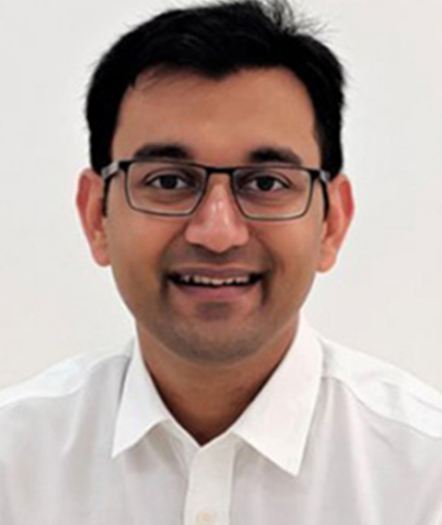
In an exclusive conversation with Dainik Bhaskar, Sidharth Sogani Jain, Founder, CEO & Fund Manager at Blue Aster Capital and CREBACO Global, shares his perspective on Bitcoin’s latest rally, the future of stablecoins, India’s market outlook, de-dollarisation, the impact of the Middle East conflict, and the biggest investment opportunities that investors continue to overlook.
-
Is the current Bitcoin rally fundamentally different from previous bull runs?
Yes. The biggest difference between this cycle and previous Bitcoin bull markets is the growing influence of institutional capital.
Earlier rallies were largely driven by retail investors and crypto-native participants. Today, institutional investors have become a major force through spot Bitcoin ETFs, regulated futures markets and professional custody solutions.
Bitcoin’s supply dynamics amplify this effect. A significant portion of the total supply is permanently lost or held by long-term investors who rarely sell. This leaves a relatively small amount of Bitcoin actively available in the market. As institutional demand increases, even moderate inflows can have a disproportionate impact on price.
Another structural shift is the maturity of market infrastructure. Price discovery is increasingly influenced by derivatives markets – particularly futures – where institutional participation is significantly higher than in previous cycles. While spot markets remain important, futures markets now play a much larger role in determining short-term pricing.
Overall, this rally reflects Bitcoin’s transition from a purely speculative retail asset to an institutional financial asset integrated into mainstream capital markets.
-
Are stablecoins becoming the biggest disruption in global finance?
Absolutely. Stablecoins are evolving beyond crypto trading and becoming critical financial infrastructure. Total market cap of USDT and USDC are over 275 Billion USD
Initially, stablecoins primarily served as a bridge between cryptocurrencies. Today, they are increasingly being used for cross-border payments, merchant settlements and tokenised financial products.
Major payment networks such as Visa and Mastercard are integrating stablecoin settlement into their ecosystems, enabling users to spend digital assets while merchants receive payments in their preferred currency.
At the same time, financial institutions are launching their own blockchain-based payment solutions. JPMorgan’s JPM Coin and Franklin Templeton’s Benji are examples of traditional finance embracing tokenised money.
USDT and USDC together represent hundreds of billions of dollars in circulation and dominate liquidity across global crypto markets. Their growing adoption suggests that stablecoins are no longer just crypto tools – they are emerging as an alternative payments infrastructure that operates faster, around the clock and across borders.
-
Why are institutions suddenly betting big on crypto?
Institutional participation is increasing because crypto has become significantly easier and safer to access. It is now institutional and here to stay. It moves not as wild as it used to before.
The launch of regulated ETFs, institutional-grade custody solutions and regulated derivatives markets has removed many of the operational and compliance hurdles that previously prevented large investors from participating.
Institutions can now incorporate Bitcoin into diversified portfolios using familiar investment vehicles and sophisticated risk management strategies, including options and futures.
Crypto is also increasingly viewed as a non-traditional asset class that can provide portfolio diversification. In an environment marked by inflation, geopolitical uncertainty and evolving global payment systems, digital assets have become a strategic allocation rather than simply a speculative trade.
Additionally, blockchain-based settlement offers an alternative payment rail for international transactions, particularly where traditional financial systems face geopolitical constraints.
-
Can Indian markets continue outperforming the rest of the world?
India’s long-term growth story remains compelling, but sustaining outperformance will become increasingly challenging.
Global investors evaluate not only corporate earnings but also currency stability, capital flows and geopolitical risks. Rising crude oil prices increase India’s import bill and place pressure on the rupee, making foreign investment relatively less attractive.
Recent foreign institutional investor (FII) outflows highlight that global capital remains highly mobile and sensitive to macroeconomic conditions.
For India to consistently outperform, the next phase of growth must extend beyond infrastructure and domestic consumption. The country needs stronger innovation ecosystems, globally competitive technology companies, advanced manufacturing and higher-value exports that can attract long-term foreign capital.
India has enormous potential, but maintaining market leadership will depend on creating globally scalable businesses and improving productivity alongside economic expansion.
-
Is de-dollarisation becoming a reality or is it just a narrative?
De-dollarisation is happening gradually, but it is far from replacing the US dollar.
More countries are exploring local currency settlements, bilateral trade agreements and digital payment systems to reduce dependence on the dollar. Stablecoins and blockchain-based settlement mechanisms are also creating new alternatives for cross-border transactions.
However, the US dollar continues to dominate global reserves, trade finance and international capital markets. Replacing that ecosystem will take decades, not years.
The more realistic trend is diversification rather than replacement. Multiple payment rails and reserve assets are likely to coexist, reducing – but not eliminating – the dominance of the dollar.
-
How will the Middle East conflict reshape global markets?
The Middle East remains one of the world’s most important energy-producing regions, making geopolitical instability a significant market risk. It is also the center of the world because is connects the most populated countries to europe and america, and airlines emerging from here benefit from the low cost fuel and great opulence of their airport and planes. The war has increased the global travel costs.
Escalating conflict can disrupt oil supplies, pushing crude prices higher. For oil-importing economies like India, this increases import costs, widens trade deficits and puts pressure on domestic inflation and the currency.
Higher energy prices also affect global manufacturing costs, transportation expenses and corporate profitability, influencing equity markets worldwide.
Periods of geopolitical uncertainty generally encourage investors to move towards perceived safe-haven assets such as gold, the US dollar and, increasingly, Bitcoin in certain market environments.
The broader economic impact will largely depend on whether the conflict remains regional or disrupts global energy supply chains. We must not forget, that all GCC Countries have dollar pegged with a fixed price.
-
What’s the biggest opportunity investors are missing today?
One of the biggest missed opportunities is access to institutional-quality investment opportunities.
Professional investment funds often gain exposure to private markets, early-stage companies, structured products and global strategies that are inaccessible to most retail investors due to regulatory requirements or high minimum investment thresholds.
Geographic diversification is another overlooked area. Many investors remain concentrated in domestic markets despite global opportunities across technology, AI, healthcare and digital infrastructure.
Finally, investors should focus on access rather than simply asset selection. The ability to participate in high-quality global investment opportunities, alternative assets and emerging financial infrastructure may become one of the most important differentiators in long-term wealth creation.
The future of investing is unlikely to be defined by choosing between stocks, crypto or gold. It will be defined by having access to the best opportunities across all asset classes and geographies. India is a very small market. Just 30 companies have over 2trillion dollars in market cap. Thats nearly half of indias economic size. I mean the concentration on few companies is massive. In sensex, 11.8% is of just HDFC bank, which can make the markets move crazy.
About Sidharth Sogani Jain
Sidharth Sogani Jain is the Founder, CEO & Fund Manager at Blue Aster Capital and Founder & CEO of CREBACO Global. A globally recognised blockchain, cryptocurrency and digital assets expert, he has been at the forefront of digital asset research, fund management and policy advisory for nearly a decade. Through CREBACO Global, he has advised over 157 blockchain projects worldwide and developed one of the industry’s most comprehensive blockchain due diligence and assessment frameworks. At Blue Aster Capital, a Bahrain-based digital asset investment firm regulated by the Central Bank of Bahrain, he leads institutional investment strategies across Bitcoin, digital assets and global equity markets. Sidharth also works closely with governments, regulators and financial institutions across India, the UAE, Singapore, the US and other jurisdictions on digital asset regulation, taxation and policy frameworks. An angel investor in more than 37 startups, he is also a Certified Bitcoin Professional and holds academic credentials from Mumbai University, the London School of Economics, and the Royal Docks Business School (UK).